

At this time of the year, if you head out around dusk you will likely be greeted by a sparkle of fireflies. Yes, sparkle is the apt name for a group of fireflies (also known as lightning bugs). Do you feel like you’re seeing more of them this year? It’s not your imagination! (Our upcoming Backyard BioBlitz offers the perfect time to make such observations!) Firefly larvae thrive in rainy, soggy conditions, and we had plenty of rain in May and June.
Male fireflies fly around and emit flashes of light through their bioluminescent abdomen in order to attract females. The females can’t fly because their wings are short or absent.
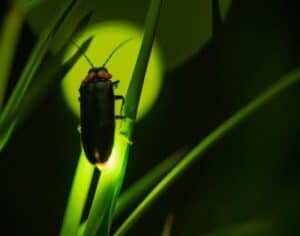
According to Firefly.org, fireflies combine three special substances in their photic organs to make light:
• Luciferin (a pigment)
• Luciferase (an enzymatic catalyst)
• ATP (nucleotide that provides energy to cells)
Their intake of oxygen “sparks” this reaction. Fireflies can even adjust their flashiness by regulating the amount of oxygen they take in!
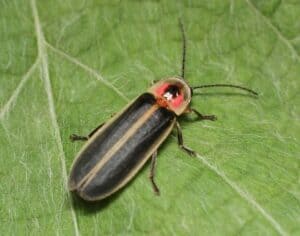
Fireflies are a type of beetle. Other beetles (and other insects) generally don’t inspire the level of excitement in humans that fireflies do. Pretty privilege, perhaps? Call it what you like, we call the nightly firefly show our reward for enduring all that that wet weather we had in the spring!